The post What a Good IT Partner Looks Like From the Inside: Part 1, Cloud Services appeared first on Beyondsoft Consulting Inc.
]]>In What a Good IT Partner Looks Like From the Inside: An Introduction, we introduced a 4-blog part series that examines the attributes to consider when choosing an IT consultancy. We are doing this from the lens of various service areas, beginning with Cloud Services, so we can provide practical real-world examples of the attributes in action.
Choosing the right IT consultancy can determine whether your cloud initiative delivers measurable value or becomes a costly, disruptive exercise.
Cloud services projects generally fall into two major categories:
Cloud migration: Moving applications, data, and infrastructure from on-premises or legacy systems to cloud environments.
Cloud optimization: Improving cost efficiency, performance, scalability, and security of existing cloud workloads.
Both require more than technical capability. They demand strategic alignment, industry understanding, and long-term partnership. A strong IT consultancy does more than implement technology. They align cloud transformation with business outcomes.
Key Attributes to Look for in a Cloud Services IT Partner
When evaluating potential partners for your cloud initiative, consider whether they demonstrate the following attributes:
- Referrals and proven customer success stories.
- Deep understanding of your business model and goals.
- Deep industry and/or vertical industry expertise.
- Strong business acumen (not just technical skill).
- Sensitivity to cultural norms, stakeholder input and KPIs.
- Comprehensive planning, training, and ongoing support.
- Global footprint and scalable delivery model.
While not all cloud services projects require all these attributes, choosing an IT consultancy that demonstrates these attributes ensures you have a partner that can tackle the current problem, identify dependencies that will impact current problem, other projects on the horizon, and future projects.
How do these attributes play out in real-world cloud services success? Here are a few of our projects that tell the story and the key attributes we brought to the table that made a difference.
Key Attributes That Drove Success in Our Cloud Services Projects
1. Understanding the Business
When the cloud infrastructure for Outback Steakhouse, Abbraccio & Aussie Brazil became sluggish and costly, we worked with them to redesign their systems. But redesigning for cost savings, while important, was not the only business issue.
This restaurant group needed a cloud platform that would be scalable and could support richer web site experiences for their customers. They also needed greater governance and security controls. By asking the right questions, these priorities surfaced and we worked on a design plan that was practical and would achieve the desired business outcomes, achieving reduced cloud costs by 30% on average.
2. Business Acumen
Many organizations believe migration alone delivers transformation. In reality:
- Migration moves workloads.
- Optimization extracts value.
Cloud optimization initiatives often uncover cost inefficiencies, performance gaps, and security vulnerabilities that emerge after initial migration. We view cloud services as a lifecycle and require continuous improvement:
Assess–> Plan–>Migrate–>Optimize–>Govern–>Continuous Improvement
When Senac RJ needed to migrate their servers to a new platform, we were able to do so quickly but also saw the opportunity to reduce processing time by 40% after moving to modern servers with all-flash storage in the cloud. The infrastructure now scales when needed and integrates with over 200 Azure services. Senac RJ now has a stable, agile environment in which they can build new tools and adopt emerging technology.
3. Deep Industry Experience
Implementing and modernizing technology is a task many IT consultants can accomplish. For Outback Steakhouse, Abbraccio & Aussie Brazil, every step along their digital journey was outlined to show value to the organization. Using our deep cloud services expertise, we were able to guide the restaurant group through migrating additional services to the cloud without their cloud costs ballooning.
When Senac RJ decided to migrate their entire data center to Microsoft Azure using Azure VMware Solution (AVS), they partnered with us, a Microsoft partner with experience running AVS migrations, to help execute the move.
4. Referrals and Proven Customer Success
Modernizing legacy servers is high risk. Businesses often rely on referrals and customer stories to ensure an IT consultancy has handled similar transformations successfully. Proven migration experience reduces the likelihood of downtime, data loss, or security exposure. With FINK, the logistics company’s CEO was referred to us and the partnership is still going strong.
5. ?Understanding Culture Norms, Stakeholder Input, and KPIs
Legacy modernization often faces internal resistance. Teams accustomed to on-premises systems may worry about change, skill gaps, and how they will operate in the new environment.
Successful migration requires stakeholder alignment. On the FINK migration project, we incorporated stakeholder input and change management best practices to deliver a smooth adoption. We now operate as an extension of their IT team so that the internal teams are now able to focus on higher-value tasks and digital initiatives knowing that the day-to-day monitoring and responding to minor and critical issues are being handled.
6. Planning, Training, and Ongoing Support
Cloud migration does not end when servers are retired. Teams must be trained on cloud management tools, security monitoring practices, and governance policies. Long-term support prevents regression to outdated processes and strengthens the security posture over time.
As a strategic partner with FINK, weekly meetings include performance reports, preventive analysis, and we provide training when needed. It also allows us to ensure that we are continually operating in alignment with the company’s vision.
Closing Thoughts
The customer examples above demonstrate that when an IT consultancy combines technical depth with strong business acumen the results are tangible:
- Cost reductions.
- Strengthened security.
- Performance improvement.
- Ability to scale and adopt new technologies quickly.
Cloud transformation done right is not just about infrastructure, it is about enabling smarter, more agile business operations. By prioritizing the right attributes in a cloud consultancy, organizations can ensure their cloud investments drive measurable and sustainable value.
Next in the series, What a Good IT Partner Looks Like From the Inside: Part 2, Data and AI Services.
Ready to discuss your IT initiative? Let us know how we can help. We are here to solve your business pain points on your terms. Onward to better business?outcomes!
The post What a Good IT Partner Looks Like From the Inside: Part 1, Cloud Services appeared first on Beyondsoft Consulting Inc.
]]>The post What a Good IT Partner Looks Like?From?the Inside – An Introduction? appeared first on Beyondsoft Consulting Inc.
]]>Leaders today are navigating real pressure from every direction: AI disrupting business models, geopolitical and economic instability, and customers and employees raising the bar simultaneously. Those who rely on yesterday’s thinking struggle to keep up.
The leaders who win aren’t just adapting, they’re rebuilding. They’re turning to IT consultancies to overhaul their infrastructure, freeing them to grow their business and take care of their customers.
As an IT consultancy, we play two roles for our clients: trusted business partner and IT strategist. We solve technical problems and help them navigate the decisions that shape their business.
I don’t think of Beyondsoft as a vendor. I think of Beyondsoft as a strategic partner or an ally who can work with me to conquer the challenges, realize my IT vision, and solve business problems. I like the fact that they are evolving their skills to meet market demands.
Luis Coimbra,??Education Tech Trusted Advisor,?Cogna?
Choosing the right IT partner?isn’t?just a procurement?decision;?it’s?one of the most important calls a leader can make. Why? Because the stakes are high, and the impact, good or bad, is visible across the entire organization.?Finding?IT consulting people who know your industry is tough. Finding?those?who also understand how you run your operations? Tougher. Finding one who knows your business??It’s?rare.?
Our team of experts are familiar with data engineering, advanced analytics, digital engineering, cloud infrastructure in AWS, Google,?Microsoft, DevOps,?QA and test automation, Salesforce automation and migration, robotics automation for data center operations, and business process management.??
We’ve?been in messy and/or complex situations to know what works versus what sounds good in a meeting.?With?more than?30 years of experience and?30,000+?experts in 15 countries, we’ve designed, built, and scaled intelligent digital solutions that equipped many clients to thrive.??We know the difference between a solution that holds up in the real world and one that only works in a demo.?
Sometimes tools alone are not enough. Our blend of deep tech expertise and practical real-world experiences makes us stand out among other vendors. That’s a gap most vendors cannot bridge.
Jasmine Jin,?Managing Director,?Beyondsoft?Americas?
Every month we will talk about what a good IT partner looks like from the inside using four of our service area offerings as examples in the 4-part blog series. Each blog outlines key attributes that contributed to the successful outcome.??
Use this series as a guide for the attributes you should consider when choosing an IT consultancy.
Part 1: What a Good IT Partner Looks Like From the Inside: Cloud Services
Part 2: What a Good IT Partner Looks Like From the Inside: Data and AI Services
Part 3: What a Good IT Partner Looks LIke From the Inside: Business Process Management
Part 4: What a Good IT Partner Looks LIke From the Inside: Digital Engineering
Ready to discuss your IT initiative??Let us know how we can help. We are here to solve your business pain points no matter how complex. Onward to better business outcomes!??
The post What a Good IT Partner Looks Like?From?the Inside – An Introduction? appeared first on Beyondsoft Consulting Inc.
]]>The post Responsible AI:?What Business?and Technology?Leaders Need to Get Right Before AI Goes Live appeared first on Beyondsoft Consulting Inc.
]]>In many industries, artificial intelligence has moved beyond experimentation into execution.
Artificial intelligence has quietly moved from pilot projects to production systems that influence real business outcomes. Models now affect customer experiences, operational efficiencies, and decisions that carry regulatory and reputational risk. As AI becomes embedded in core workflows, leaders face increasing pressure to move fast without losing control.
In this context, Responsible AI is not a policy exercise, concept or side project. It is the discipline of designing, governing, and operating AI systems in ways that can be explained, defended, and trusted over time.
Responsible AI Starts with the Decisions You Make Early
Responsible AI is often described in terms of principles. The National Institute of Standards and Technology (NIST) AI Risk Management Framework offers voluntary guidance to individuals and companies on managing risks that AI poses in various contexts throughout its lifecycle in order to deploy and use trustworthy AI models. Trustworthy AI characteristics, as defined by NIST, include:
- Validity
- Reliability
- Safety
- Security
- Resilience
- Accountability
- Transparency
- Explainability
- Interpretability
- Privacy enhancement
- Fairness
Those ideas matter, but they only become useful when translated into day-to-day decisions. For leaders responsible for budgets, systems, and outcomes, Responsible AI usually comes down to questions like:
- Do we understand what data is being used and where it came from?
- Is the data factual and can it be relied upon?
- Can we explain how a model influences decisions that affect customers or patients?
- What controls are in place if the system produces incorrect or biased results?
- Who is accountable when the model changes or fails?
Responsible AI provides structure for answering these questions early, rather than reacting after a problem surfaces.
The Real Business Risks of Getting AI Wrong
As AI moves closer to core business processes, the cost of mistakes increases. A model that behaves unpredictably or uses data incorrectly can trigger compliance issues, erode trust, or force teams to shut down systems they have already invested in.
This is especially true in regulated industries. Financial services and healthcare companies operate under strict rules around data usage, explainability, and auditability. Even in high-tech environments, customers and partners expect clarity about how automated decisions are made.
Businesses that take a disciplined approach to Responsible AI are usually able to move faster over time. Clear governance reduces internal friction, shortens review cycles, and helps teams reuse patterns that have already been approved. Instead of debating the same issues on every project, teams know the boundaries and can focus on delivery.
Responsible AI also affects how businesses are perceived. Companies build trust when their systems behave consistently and their decisions can be explained. Once trust is lost, it is difficult to regain.
Why Responsible AI Breaks Down Inside Companies
The common challenges of Responsible AI for companies are execution-driven, not principle-driven. When ownership is fragmented across legal, security, data, and product teams, this reduces Responsible AI to a compliance checkpoint rather than an outcome-driven operating model.
When guardrails don’t scale across teams, this issue is amplified by agentic AI systems making chained decisions. For example, an agentic AI system might automatically approve a customer request, trigger a downstream workflow, and adjust pricing or access controls without any single team owning the full decision chain.
And evaluation often stops at launch, leaving companies compliant on paper but exposed in production.
How We Help Teams Operationalize Responsible AI
It’s difficult to apply Responsible AI principles after an AI solution is built. Our approach focuses on aligning legal, business, and technical perspectives before development begins.
Designing AI With Legal and Governance in Mind from Day One
We involve our legal counsel as a partner early in our AI projects. This helps clarify expectations around legal requirements, data usage, retention, explainability, and accountability.
We also work closely with your legal team to align the solution with your governance standards and regulatory obligations. This reduces rework and creates shared ownership of the outcome.
Responsible AI is about knowing how we’re using AI and having guardrails to catch them before they matter. It is also about making sure all parties are aware of shared responsibilities.
Brittany?Burback,?Corporate?Counsel,?Beyondsoft?
Aligning Business Goals, Technical Design, and Guardrails Early
Our approach starts in the planning phase, where we assess AI operating readiness and clarify how AI is expected to help, along with the guardrails that need to be designed upfront. We discuss current pain points, decision processes, and constraints.
At this stage, we share a clear governance approach covering data access, privacy, security controls, model lifecycle management, and operational oversight. Together, we define requirements that are specific enough to guide implementation, not just intent.
As a Microsoft Azure Solutions Partner, we hold designations across Security, Data and AI, Azure Infrastructure, Digital and App Innovation, and Modern Work, along with multiple specializations. These reflect experience delivering systems that operate under real-world conditions, including environments subject to regulatory review and production constraints.
While we have deep expertise in the Microsoft Azure tech stack, we are technology agnostic. In a rapidly developing AI platforms, we build AI solutions using the tech stack you’re familiar with. Together, we decide the best fit technology to build a sustainable AI solution.
Akin Uslu, VP, Strategic Client Engagement
Delivering AI Systems That Can Be Governed Well in Production
Each AI project brings different risks and dependencies. We bring in our team members based on the problem at hand and establish clear plans for communication, decision-making, and escalation.
Delivery is iterative, with defined checkpoints. Proofs of concept are tied to specific questions they are meant to answer, not just technical feasibility. Roadmaps include the controls needed for monitoring, validation, and ongoing governance.
We also work with you to design data architectures that support Responsible AI. Well-defined data pipelines, access controls, and lineage make it easier to understand how outputs are produced and to defend those outputs when questions arise.
When business, technical, and governance teams share the same understanding, AI systems are easier to operate responsibly and easier to trust.
Responsible AI isn’t about policy or compliance. It’s the architectural foundation that makes AI trusted, safe, and capable of delivering real business impact at scale.
Sindy Park, Senior AI Product Manager, Beyondsoft
Responsible AI as a Long-Term Operating Model
Responsible AI is not about slowing innovation or aiming for perfection. It is about making intentional choices that allow AI systems to operate reliably in real environments.
From readiness assessments to ideation, proof of concept to testing, and production to solution delivery, our focus is helping you apply AI where it makes sense, with clear guardrails and accountability.
Gary Li, AI Expert, Beyondsoft
When business and technology leaders align governance, accountability, and technical design, they can scale AI with confidence rather than concern. In industries where trust, compliance, and reliability matter, this is what turns AI from an experiment into an asset.
NEXT STEPS?
If you are looking for an AI partner to improve your business workflow, we’re ready to help you break down the key components required to start or continue your AI journey. Get in touch with us.?
The post Responsible AI:?What Business?and Technology?Leaders Need to Get Right Before AI Goes Live appeared first on Beyondsoft Consulting Inc.
]]>The post Microsoft Specializations: What They Mean for Your Business appeared first on Beyondsoft Consulting Inc.
]]>For mid-sized and enterprise companies, keeping pace with technological change is essential for their operations. What counted as “modern” a few years ago may now feel slow, risky, or difficult to manage.
Data volumes continue to grow. AI is moving from optional to expected. Security, privacy, and compliance requirements keep tightening. Meanwhile, your business goals don’t pause while your teams work to catch up.
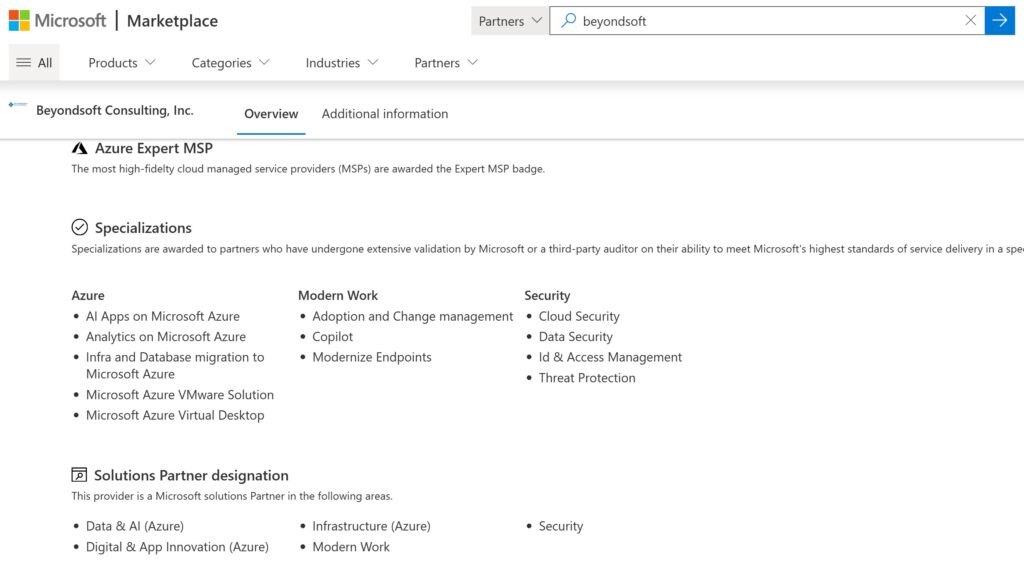
That environment is why Microsoft created its Specialization program. And it’s why we continue to renew and expand our specializations year after year. Renewal proves that we keep our skills current and that we meet delivery standards.
In 2026,?we?hold 13 Microsoft Specialization badges, including three?newly earned areas:?Build AI Apps?on Azure,?Microsoft?Azure?Analytics, and Copilot.?We pursued these?specializations?because?the work?we’re?asked to do keeps changing, and?we need?to?provide?external validation that our skills are keeping pace.??
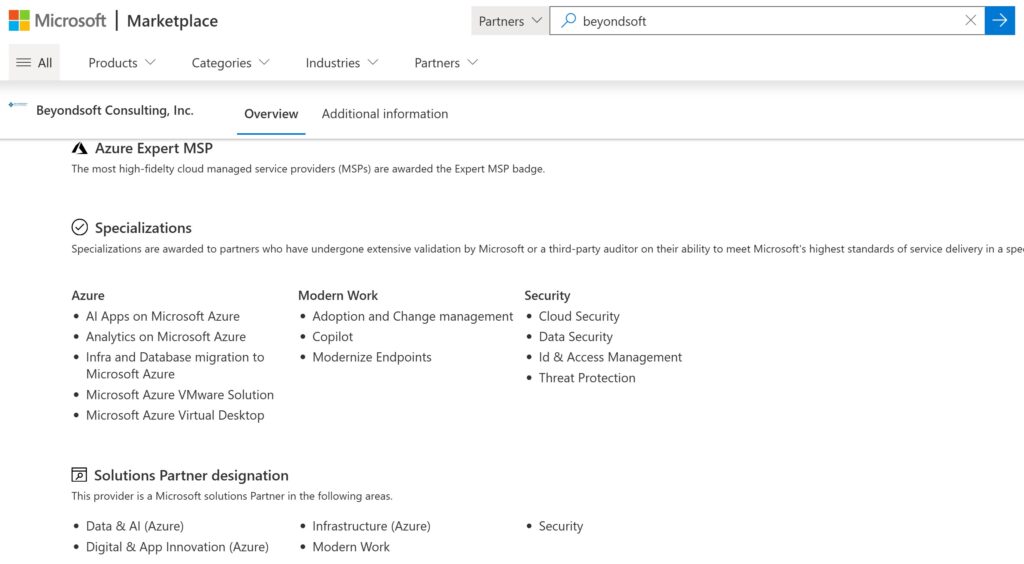
We’re also an Azure Expert MSP (type Beyondsoft in the partner search box). Only a select group of the most high-fidelity cloud managed service providers (MSPs) are awarded the Expert MSP badge.
Why Choosing a Specialized Partner Makes All the Difference
Microsoft Specializations aren’t awarded for training completion or partner status. To earn or renew one, a partner must go through independent audits that review real client projects, technical designs, security practices, and delivery outcomes. These audits confirm that the partner follows Microsoft methodology.
From a client perspective, the value is simple: A specialization is evidence that a partner has already solved similar problems under real-world conditions, and that an independent third party has audited it.
For regulated and fast-moving industries, that matters. Working with a partner who understands your environment and industry reduces risk and shortens time to value.
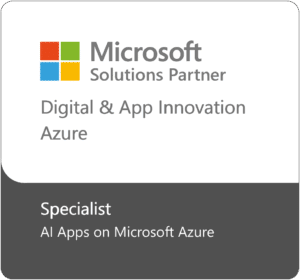
Build AI Apps: When AI Moves from Concept to Reality
Many companies are under pressure to “do something with AI.” At the same time, most are cautious for good reasons. AI introduces new risks around data use, explainability, and integration with existing systems.
The Build AI Apps specialization reflects the work we’ve done helping you move past experimentation and into controlled, production-ready use.
How this shows up across industries:
- High-Tech: AI integrates into products and platforms without disrupting performance or release schedules.
- Healthcare: AI supports clinical and operational work without compromising patient privacy or regulatory compliance.
- Financial services: AI must be auditable, traceable, and aligned with existing risk frameworks.
Microsoft Specializations show that a partner has already dealt with the hard parts: integration, governance, and long-term maintainability.
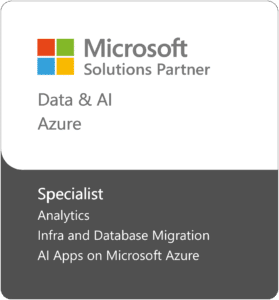
Analytics: When Data Exists but Insight Doesn’t
Most of our clients don’t struggle with data collection. They struggle with using it consistently.
You may see conflicting reports, dashboards no one fully trusts, or teams spending more time reconciling numbers than making decisions.
Analytics specialization reflects our experience helping clients build analytics foundations that are practical, not theoretical.
What this means in practice:
- High-Tech: Product and engineering teams get clearer visibility into usage, performance, and trends without manual workarounds.
- Healthcare: Leaders can understand operations and outcomes while maintaining strict controls over sensitive data.
- Financial services: Risk, finance, and operations teams work from aligned data instead of competing versions of the truth.
Good analytics doesn’t eliminate complexity. It reduces uncertainty so decisions can happen faster and with more confidence.
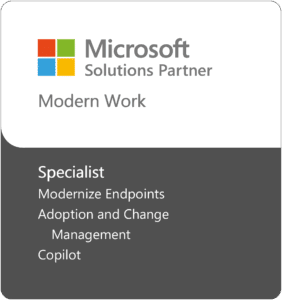
Copilot: Productivity Gains Without Losing Control
Copilot changes how people work by changing how they interact with information. The potential for business transformation is real, but so are the risks if companies deploy Copilot without preparation.
Data access, permissions, and information structure all matter. Without the right groundwork, Copilot can surface the wrong content or fail to deliver meaningful value.
The Copilot specialization reflects work focused on readiness and responsible adoption personalized to the clients’ needs.
Across industries, the concerns are familiar:
- High-Tech: Protecting intellectual property while improving team efficiency.
- Healthcare: Supporting documentation and access to knowledge without exposing sensitive data.
- Financial services: Enabling productivity while maintaining governance and compliance.
The goal isn’t to deploy Copilot quickly. It’s to deploy it in a way that helps your team work better.
Choosing the Right Partner
Technology leadership isn’t just about having expertise; it’s about applying it in ways that solve real problems. These specializations reflect our ability to turn technology investments into meaningful outcomes: secure systems, measurable performance, and confidence in execution.
Eduardo Mecking, Head of Microsoft Alliance for Americas
If you’re evaluating partners, Microsoft Specializations won’t tell you everything. But they do tell you something important, which is whether a partner has been independently reviewed against the kind of work you need done.
If you already work with us, these specializations reflect our commitment to staying sharp and help you turn your challenges into opportunities.
If you’re looking for a partner who understands the realities of your industry and is willing to be held to an external standard, let’s connect. We’d love to talk and find out if we’re the right fit to help you move forward on your terms.
The post Microsoft Specializations: What They Mean for Your Business appeared first on Beyondsoft Consulting Inc.
]]>The post 2025 Americas Region Year in Review appeared first on Beyondsoft Consulting Inc.
]]>As we wrap up the year, we want to thank our employees, clients, and partners for their trust and support. Here are a few of the moments that made this year so memorable.
New Americas Head Office
We moved to a new location. The new location represents how modern consulting teams’ work. Flexible desks, larger client rooms, a hub for quick conversations, a gym, and easy access to transit and restaurants. People come in when it matters, which makes time together productive and meaningful.
Turning Expertise to Impact
AI has been part of every conversation we’ve had at work, over dinner, even on family group chats. Everyone’s curious. The big question we keep hearing is, “Is this really useful, or just hype?” To be honest, we’ve asked the same.
Our answer is simple. Start small. Focus on problems that matter. Deliver outcomes that teams trust. That’s where the real impact is.
Simplifying Knowledge Discovery
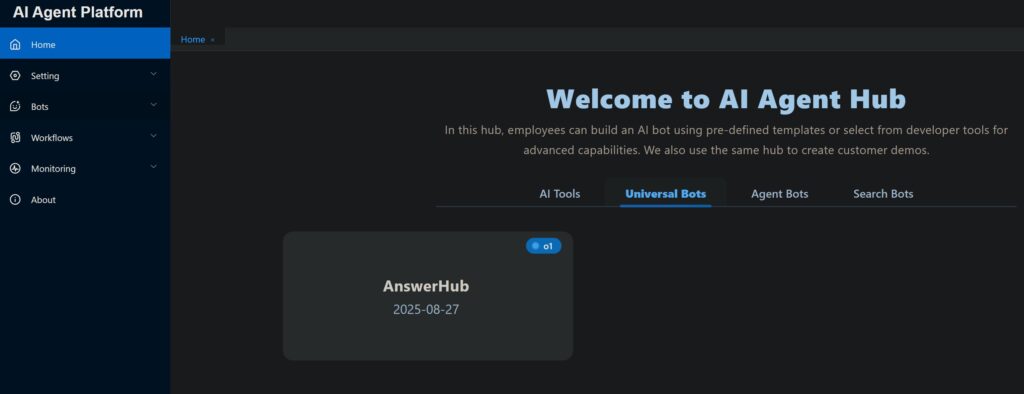
We fine-tuned our internal Answer Hub giving employees instant access to company policies, processes, and client stories easily. It is accurate, fast, simple, and always available. It frees our functional teams to focus on work that requires judgement, not repetition. For more complex needs, employees can still reach out to our individual functional teams.
Smarter Fraud Detection
Most financial institutions still rely on rule-based detection that miss fast-moving threats. Our approach applies AI models that adapt, learn, and scale across banking, healthcare, telecom, and transportation. Watch this video to see how AI handles fraud detection.
Data Operations Assistant
Data checks grow in complexity as volumes rise. Our Data Operations Assistant automates routine validation, so data teams focus on higher-value decisions. It is fast, consistent, and reduces error rates. Watch this video to see how AI handles data checks.
Digital Employee System
Manual testing slows delivery. Our Digital Employee System lets you create and run tests through natural conversation. Every step is traceable, making issue resolution faster and easier. Watch this video to see how AI executes test cases.
Keeping Our Microsoft Expertise Sharp
Maintaining a Microsoft specialization requires a strict third-party audit and ongoing proof of expertise. We maintain these specializations to sharpen our knowledge and provide the best expertise to our clients. Most of our clients use a fraction of Microsoft solutions. A specialized Microsoft solution partner like us can help you increase that percentage, ensuring you are making full use of the product features and realize cost savings fast.
This year we added three specializations: Analytics and Build AI Apps for Microsoft Azure, Copilot for Modern Work, and we have earned Azure Expert MSP for three consecutive years (2023 to 2025).
2025/2026 Cloud Awards Shortlist
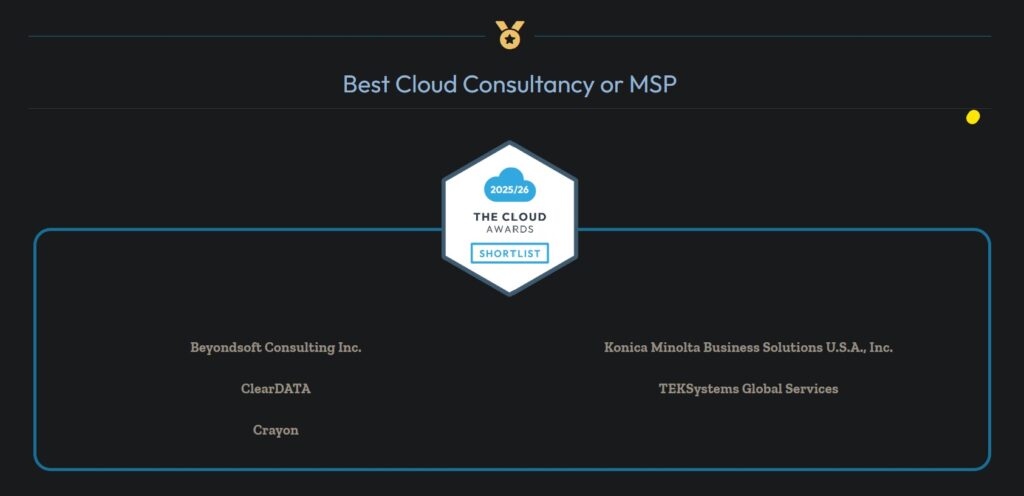
We earned a shortlist spot for the 2025/26 Cloud Awards – Best Cloud Consultancy or MSP.
Leadership in AI era
Tools evolve fast and leadership remains critical. Why? Because AI is only as effective as the people guiding it. Human judgment, culture fit, and clear communication are what turn automation into actual business value.
When change is constant, our business leaders focus on alignment, clarity, and momentum:
Ajay Dixit reflects on how to stay grounded and focus on clear communication while moving fast in a competitive environment.
Eduardo Mecking encourages open dialogue and creating transparency to ensure his team feels supported and heard.
Joyce Luo shares how she creates calm in times of uncertainty and brings her team back to shared purpose.
Mark Ray shares why, especially during rapid change, and know that trust is non-negotiable.
Wing Liu embraces uncertainty, making tough calls, and standing by her team.
Thought Leadership Media Coverage
AI Readiness
Most companies are unsure whether AI is right for them. Fair question.
AI is only valuable when you and your team agree that it solves the problems on your terms. Patrick Tang shared practical tips on AI readiness.
Still not convinced? Our work shows that when AI is integrated into a people-centered culture, productivity and engagement grow in lasting ways.

Robotic Automation for Data Center Operations
AI is driving rapid expansion in data centers, creating new operational demands. We partnered with clients to deploy robotic automation that increases safety and improves uptime. Wing Liu details what works in the real-world environments in this article.
Driving Customer Success
This year we shared 12 customer stories that provided real-life examples of how our team partnered with our clients and their stakeholders to solve challenges in Insurance, Healthcare, High-Tech, and many others. One highlight: Microsoft featured Globo story on its Customer Story website. Here are the customer stories we captured in 2025:?
A Hyperscaler Improves Data Center Operations with Robotic Automation and Tighter Process Control
Eneva’s Engineers Cut 20 hours in One Month Using Microsoft 365 Copilot
Globo’s Strategy in Adopting Microsoft 365 Copilot to Drive Continuous Innovation with Help from Beyondsoft
How One Tech Company Cut Through Licensing Complexity
A Global CDMO Replaces Scattered Communications with Centralized Collaboration Hub
Global CDMO Builds a Modern Enterprise Data Lake with Beyondsoft
Regional Financial Institution in Texas Revamps Data Workflows for Faster Delivery
One Calendar View Solves Ad Placement Chaos for a Top Tier Streaming Company
A Global Streaming Services Company Automates Almost 70% of Tasks with Salesforce Expertise from Beyondsoft
Keeping Critical Systems Running: How Beyondsoft Helped a Fortune 100 Client Stay Compliant
Real-time Test Lab Visibility into Operations Helps High-Tech Firm Improve Efficiency
Fostering a Strong Team Culture
Beyondsoft Brazil Earns Great Place to Work Recognition for Three Years
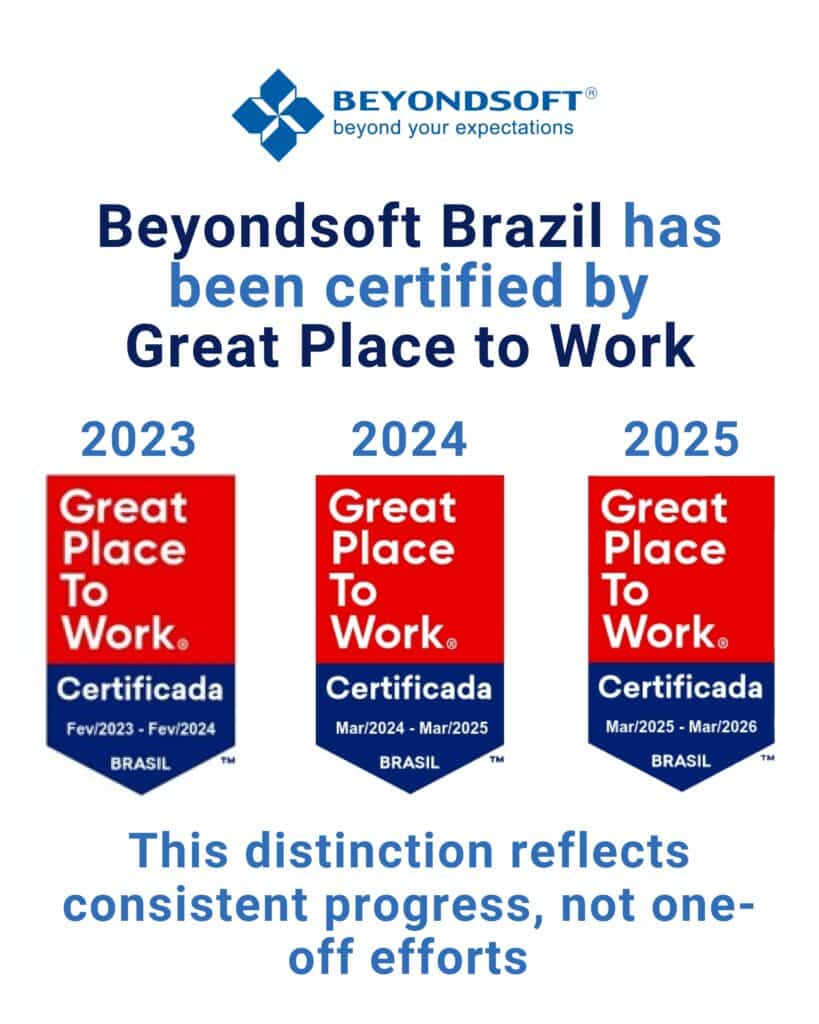
For third straight year, our Brazil team was named a Great Place to Work. The award reflects a culture built on support, trust, and a commitment to well-being. Larissa Ferreira, our Marketing Lead for Brazil has the scoop.
Team Event Across the Americas
Bellevue: Our Bellevue team members traded emails, Power Point decks, and spreadsheets for a dumpling-making session. Some of us were pros, creating restaurant-worthy pleats that looked like tiny pillows.
It was about slowing down, being intentional helping each other, learning, laughing, and celebrating the small wins (like finally sealing a dumpling without the filling bursting out).

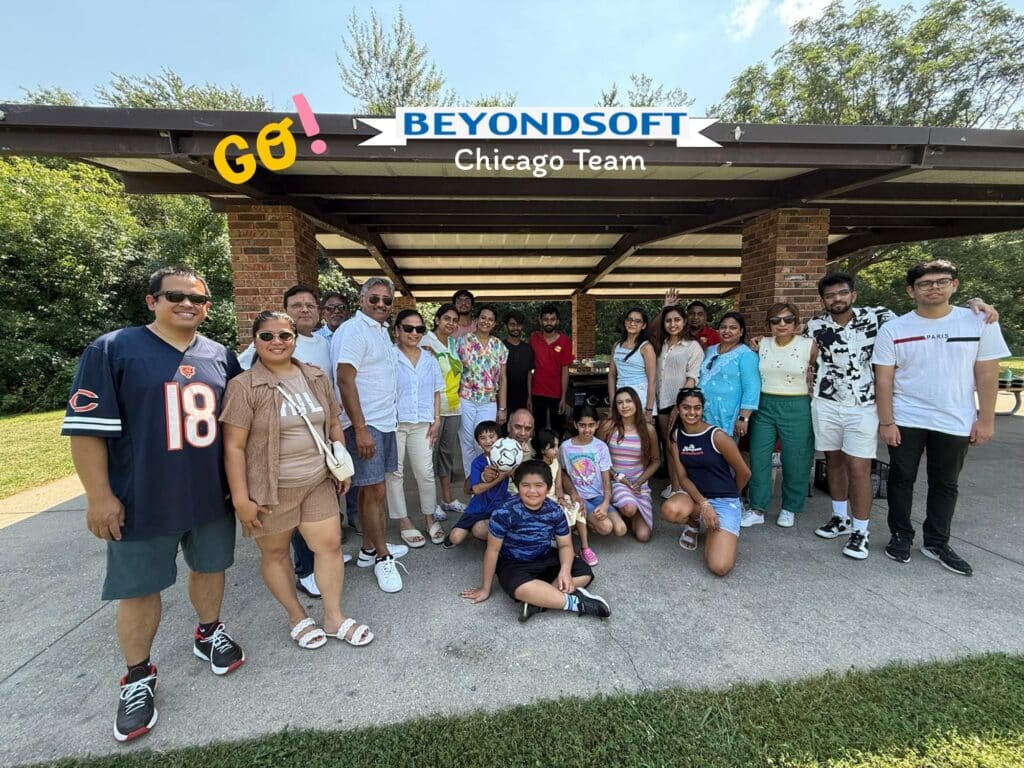
Chicago: Our Chicago team members gathered for a picnic in the park with their families. Their laughter and sharing of weekend hobbies created a special bond between families and colleagues. These moments matter more than any team building exercise.
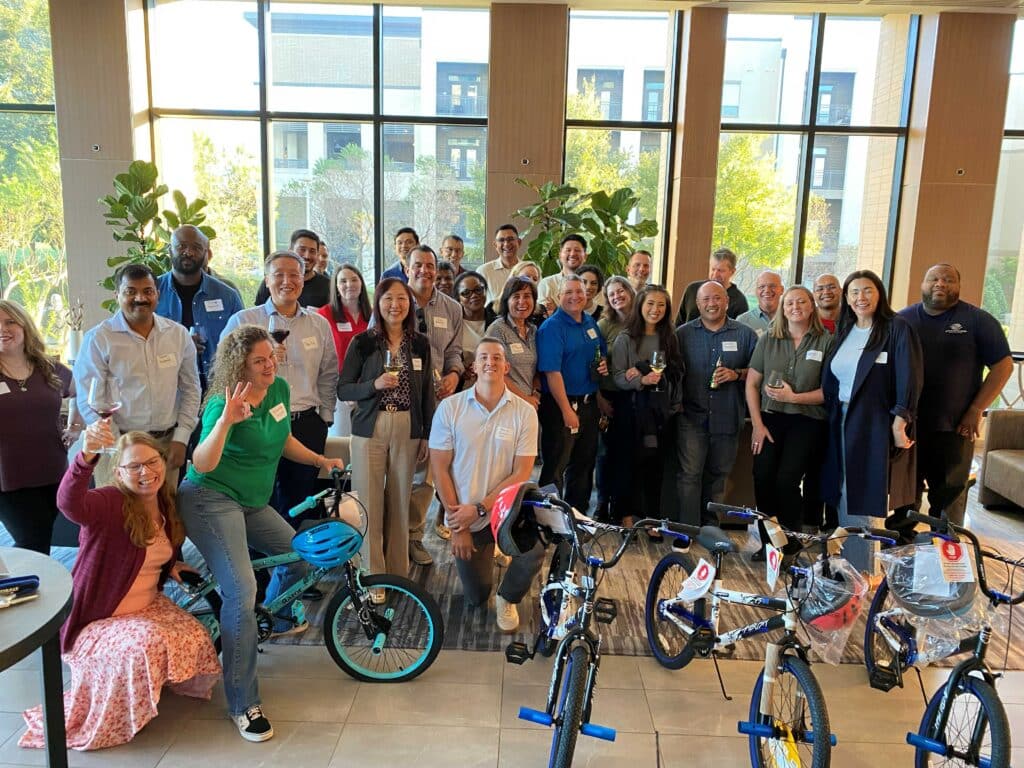
Dallas: Our Dallas team members came together with our clients and team members to build bikes for kids through Build-A-Bike. These bikes were donated to the ???????? ?????? ?????????? ???????? ???? ???????????? ????????????. It was great to connect outside of our usual work routines, all while giving back to the community.
Paying it Forward
Giving back matters to us.
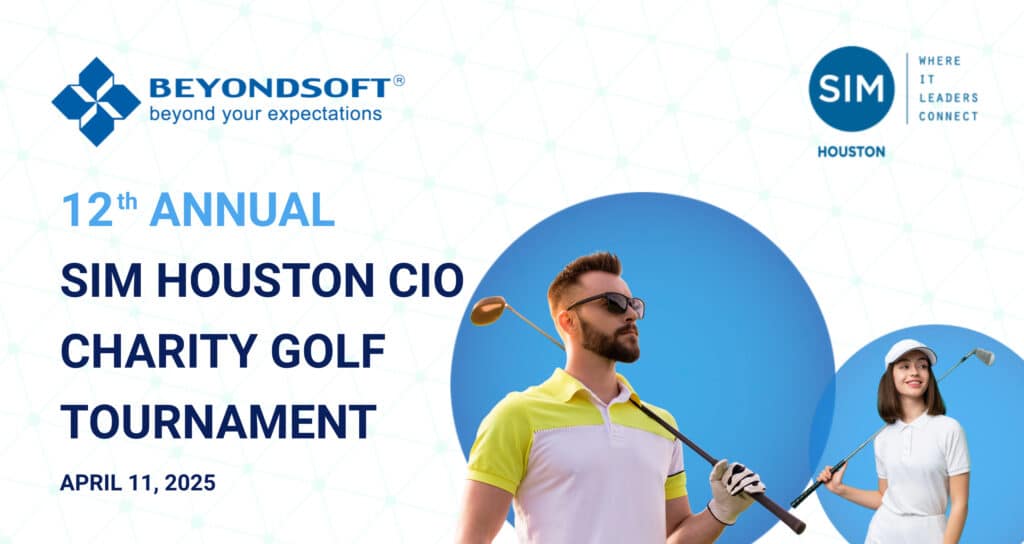
In April, we participated in the 2025 Society for Information Management (SIM) Houston Charity Golf Tournament. We proactively invite all golfers in the Houston area to participate in the round of golf and raise funds for Greater Houston Metro Area Science, Technology, Engineering, and Math (STEM) initiatives.
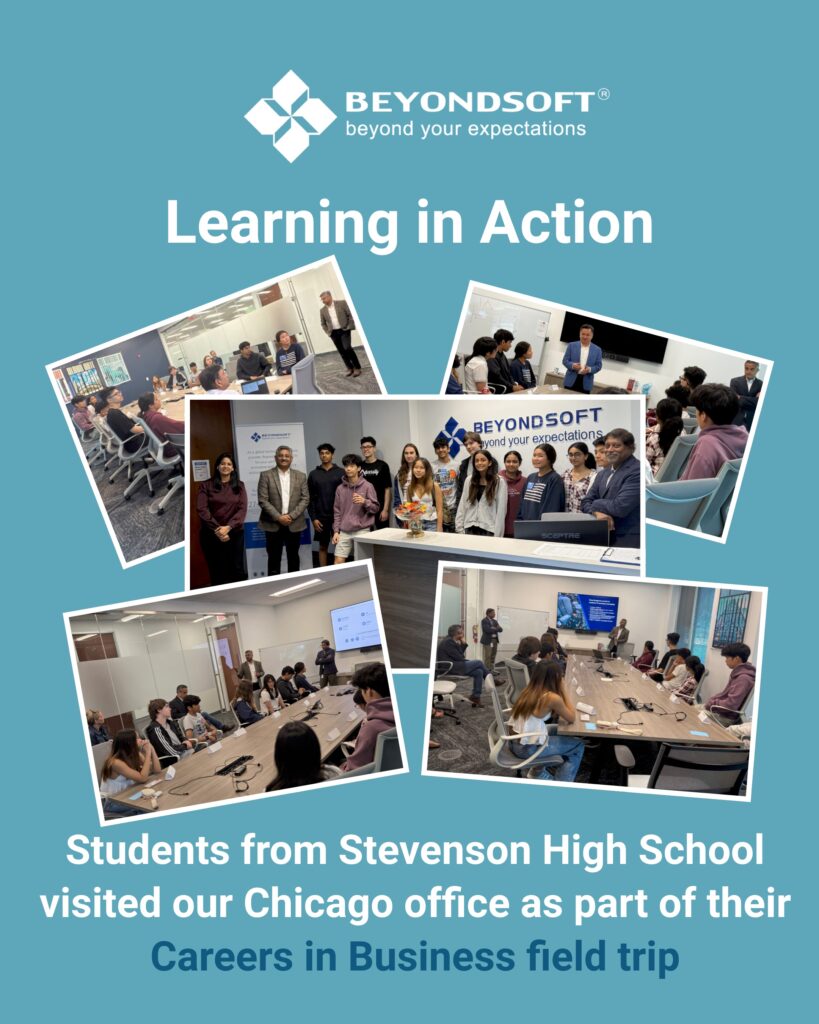
In June, our Chicago team members hosted 15 students from Stevenson High School to our Schaumburg office, and we exchanged thoughts on the need for lifelong learning, an essential mindset required to be successful in the working world.
Our team shared personal insights into:
1. Day-to-day responsibilities across consulting, IT, and project management
2. Core skills and mindset needed to thrive in a dynamic workplace
3. Strategies for building a business network and investing in personal brand early
In October, we launched Eastside B2B Marketing Meetup, a place where marketers can meet face-to-face, swap stories, and learn from each other in a judgment-free zone. This free meetup is all about building real connections and having those honest conversations about B2B marketing that you don’t always get time for during the workday.
A Final Word
What a year! We moved our Americas head office to a new location, celebrated our 30th anniversary, expanded our Microsoft specializations, launched our AI platform, and earned a shortlist spot for 2025/2026 Cloud Awards – Best Cloud Consultancy or MSP. Microsoft even featured one of our customer stories on AI adoption. But what stands out most is our team. We show up for our clients, they give us space to innovate, and our people deliver. I’m excited to see where 2026 takes us.
Jasmine Jin, Managing Director, Beyondsoft Americas
Looking ahead, if you planning your next step in your digital journey, we’re ready to help you move with confidence and scale with speed. Contact us?today and let us explore the future together.?
The post 2025 Americas Region Year in Review appeared first on Beyondsoft Consulting Inc.
]]>The post Successful AI Adoption Begins?with?Change Management? appeared first on Beyondsoft Consulting Inc.
]]>This is the focus of my role as I work with companies to think about change management prior to adopting new technology. Together with my team, we work with our clients and their extended teams to build confidence and develop habits that help them get real value from AI. Our principle is simple: AI adoption is a business outcome that depends on human behavior, not a technical rollout.
The following is the distilled view of how my team, and I use change management methodology and research from Prosci on the conditions that help people embrace better ways of working.
Start With People, Not Technology
Many organizations assume change begins with new technology deployment and licensing. They assume user adoption and the positive change they envisioned will follow. We see this pattern often, and it always leads to the same outcome: the technology arrives, but the behavior does not.
The Prosci Calatlyst Report (March 2025) emphasizes that AI won’t transform your organization, but the people who use AI will. Effective change management starts with bringing people along in the transformation journey, ensuring they understand the purpose of the change, how their work will shift day to day, receiving support during the initial stages, creating a cadence to check in on progress, and seeing clear sponsorship from leadership.
Act with common sense and empathy. There are better times to initiate projects that require change: avoid holidays, large events, or companywide stress periods. Understand culture, current workload, and earlier change cycles before deciding on timing.
When any of these pieces are missing, teams struggle to connect the new technology to their work, and they may view it as yet another tool to learn.
Change Management: A Program, Not Just a Project
AI does not settle into place and then stay fixed. Models and requirements evolve. New features appear. Training content and best practices become outdated and need to be revised faster than expected.
We encourage leaders to treat AI adoption like a long-term program. It requires updated training, sustained communication, and repeated opportunities for employees to practice and ask questions. Teams also need clarity on direction so they can see how their work fits into the larger plan.
When companies automate manual tasks, important knowledge can disappear if it is not captured. We recommend interviewing power users and domain experts documenting how work happened before automation and tracking improvements over time. This ensures companies understand whether AI genuinely supports the team.
Governance only works when it supports how people adopt the change. It should create clarity, guide decisions, and help teams stay aligned as the program evolves. Strong governance makes it easier to adjust plans, manage risk, and keep momentum. In programs that succeed, the organization treats adoption with oversight as a shared journey rather than a single rollout.
Middle Managers Set the Example
People look to their leaders to understand how serious the organization is about change. Middle managers have an especially powerful influence because they understand the specific pressure points, dependencies, workplace culture, and habits of their teams and are well acquainted with the ‘messy middle’.
In AI projects, the messy middle is the phase between early excitement and real outcomes. It is where the pilots are done, the risks are clearer, and the work gets harder. Teams are adjusting processes, cleaning data, rethinking handoffs, training people, and sorting out what will scale. Questions about ownership, quality, security, and day-to-day use arise at the same time.
It is messy because people are learning and unlearning while the organization is still figuring out how AI fits into the work. We emphasize that this is also the point where momentum can stall if leaders do not give clear direction, reinforce priorities, and help teams stay focused on what matters. If middle managers feel confident and supported, their teams follow.
AI Can Strengthen Change Management Efforts
In the transition to AI enabled work, AI can help change managers accelerate their efforts, working as a tool to communicate clearly, and create informational and training content. My team and I use AI to prepare training materials and tailor them to each user persona, analyze usage data, simulate user groups and flag possible blind spots, and create targeted, department-specific communication plans.
Strong AI Programs Avoid False Starts
I have seen companies adopt AI too quickly. Some purchased licenses early and moved straight to deployment. Without thoughtful training or leadership involvement, employees used only the most basic features. The potential return never materialized.
Organizations that succeed take a different approach. They begin with a defined business outcome, involve multiple sponsors, and recognize that teams must change how they work. They also invest in readiness, program planning, and follow through.
Two recent customer stories of AI change management projects our team had led at Beyondsoft illustrate the difference:
- Eneva: Engineers gained back 20 hours of routine work per month by learning how to use Microsoft 365 Copilot with purpose.
- Globo: A major media company that successfully introduced Microsoft 365 Copilot with clear sponsorship, structured communication, and a focus on real work scenarios.
Both show that the effort, planning and enablement around technology matters as much as the technology itself.
Culture Determines Readiness
During the first weeks with a new client, we look for signals that show how prepared the organization is. We check whether there is a dedicated change team, whether adoption is funded, and whether leaders understand that training alone will not ensure success in the full program.
Prosci research reinforces this. Culture influences trust, confidence, and the rate at which people adopt new habits.
Personalize the Journey for Each Team
No two teams adapt the same way. Engineers want hands-on examples. Sales teams want use cases that support client conversations. Global teams need cultural adjustments and local context. The tools to socialize the change with workers are different for hybrid and remote workers, versus employees who work in the office five days a week.
We encourage companies to treat each group as its own audience and find ways to connect and roll out the change in person whenever possible.
Address Budget and Timeline Gaps Early
Change management is about people. It is not about the technology or the tools a project brings in. Leaders often miss this. A quick way to see it is to look at a project budget and notice how little is set aside for adoption. That tells you where the focus really is. When teams put users at the center and communicate clearly from the start, they create conditions for real transformation.
Jo?o Labre, Change Management Specialist and Director of Modern Workplace
Leaders often want a people-first program but allocate resources for a technology first rollout. We encourage teams to explain the risk clearly. AI depends on user skill. Without training, feedback loops, and leadership involvement, the return decreases.
Prosci findings show that projects with strong change support meet their goals more often:
Prosci Catalyst Report, March 2025
56% of AI challenges are human, not technical. Yet too often, the “people side” gets handed off to IT or innovation teams, when it’s leadership that must guide the transformation.
Make New Habits Stick
Sustained adoption requires repeated support. Companies must keep communicating, training, and reinforcing value. Metrics help teams see progress. If a program needs to shift direction, leaders should explain it openly to maintain trust.
When adoption slows, I recommend starting with empathy. Listen closely, understand concerns about automation or workload. Identify what each group values and show real examples of improvement in those areas. People respond when they feel heard and supported.
Prove Value with Clear Metrics
We remind teams to measure progress early and often. Quick wins help maintain interest. Long term work gives direction. Leaders need to plan both paths from the start for any change endeavor. It’s important to share progress, learnings, and setbacks openly, keep the big picture mind by continually reinforcing the the larger goal to keep teams informed and connected.
Short-term indicators include:
? Attendance in training
? Engagement with training materials
? Usage patterns of the new technology
Long-term indicators include:?
? Productivity gains by team?
? Time savings?
? Quality improvements?
? Team satisfaction
From a qualitative point of view, culture also reveals progress: when teams reference new habits in daily conversations, adoption is taking hold.
Adjust Communication for Remote and Hybrid Work
The biggest communication mistake is assuming you already know what users need. Spend time listening. Ask questions. Give people a chance to express concerns. Explain the reasons behind changes and how individuals will benefit.
AI adoption depends on people building new habits. Communication is the foundation. Remote work changes how adoption teams communicate. When digital channels replace physical spaces, engagement needs to be considered accordingly, for instance remote workers won’t see flyers posted on bulletin boards and may not be able to attend lunch and learn sessions. Despite this shift, where possible, in person AI training remains the most effective, partly because shared experiences build confidence and momentum.
Use Global Delivery Centers to Scale Adoption
Global delivery centers help organizations scale AI programs across regions. They provide templates for training, communication materials, program planning, and knowledge sharing. They also create community and consistency across markets and can act as hubs for remote workers.
Companies benefit from a delivery center when they need speed and consistent structure across multiple teams to ensure that a strategic change management project achieves its long and short-term goals.
Final Thoughts
AI delivers value only when people feel confident enough to use it. When organizations invest in communication, training, and leadership involvement, employees respond with curiosity and trust. When effort is sustained programmatically, new habits take root.
With the right approach, companies can help their teams build skills that support long term success with AI and create meaningful change across the business. Contact us to make your next major change successful in the short and longer term.
The post Successful AI Adoption Begins?with?Change Management? appeared first on Beyondsoft Consulting Inc.
]]>The post AI Readiness Guide: The What, How, and Why for Business Leaders? appeared first on Beyondsoft Consulting Inc.
]]>Here’s the uncomfortable truth: AI isn’t replacing humans. It’s replacing humans who don’t work with AI.
That’s not fear mongering. I’ve spent 26 years in technology, most recently helping organizations assess their AI readiness. I’ve worked across many industries and seen it all: the good, the messy, and the “still using Excel spreadsheets to forecast demand” disasters.
Understanding AI Readiness
I’ll share my perspective on AI Readiness: Think of AI readiness like a video game with four levels. Most companies think they’re further along than they really are.
Here’s the breakdown:
Level 1: Dipping Your Toes In
You’re curious. Maybe you’ve tried ChatGPT, Claude, Perplexity, or others a few times. You’re attending webinars, reading articles, and running small pilot projects. Mostly, you’re waiting for someone to show you what’s possible.
This stage is about learning the fundamentals, knowing the terminology, and getting comfortable.
Level 2: Running Pilots
Now you’re running pilots that save precious time. We know that using AI cuts document review cycles, so employees get more time back to do thinking work or reflect on how to use their time more appropriately with AI at their disposal.
The hard part? Getting people to stop working the old way. You can’t force people to use AI; you must encourage and coach them through it.
Level 3: Making It Work
You’ve figured it out in one department; now you’re rolling out what works companywide. You have clean data, and your dashboard makes sense. Your team knows that testing and learning are part of the job now.
Here’s what I’ve observed from most companies: jamming AI into complicated processes makes everything worse. The winners simplify first, then automate.
Level 4: Living in the Future
Only a few companies make it to Level 4, and they’re the unicorns. AI isn’t a project; it’s how they work. They build their own models, sell AI services to others, and blend human creativity with AI tools so smoothly you can’t tell where one begins and ends.
Practical Steps toward AI Readiness in Three Months
Here’s my playbook:
Month 1: Get Your Leadership on Board
Not just “yeah, sure, try it” buy-in. Real championship. Because if your CEO isn’t talking about it, your team won’t take it seriously.
Pull together a cross-functional team that also involves IT, legal, HR, and other stakeholders. Decide what success looks like before you start. And here’s the key: figure out what problem you’re solving. There’s no copy-paste formula, and if you don’t lay out the right foundation, this will be a pointless exercise in which you’ll just be burning money.
Months 2-3: Clean Up Your Mess
Data cleanup isn’t sexy, and it takes months. But you can’t skip it. To put it bluntly, without clean data, any AI or automation endeavor will be “garbage in, garbage out.”
So, audit your data. Connect your systems. Tighten your security. Do the boring work that makes everything else possible.
Month 3 and Beyond: Prepare Your People
This is where most companies fail. They buy the tech, ignore the humans, then wonder why nobody’s using it.
Be honest about fear. People are afraid that AI will take their jobs and that’s normal. Talk about it. Train people properly. Show them that AI is a helper, not a replacement.
Bidirectional communication is always key. Translation: don’t just tell people what’s happening. Listen to them.
Common Mistakes in AI Readiness
Half of all companies jump into generative AI with zero preparation. Don’t follow their footsteps.
- Don’t follow the hype. Just because your competitor is doing something doesn’t mean you should.
- Don’t ignore your culture. Resistance from your team will kill your project faster than any technical problem. Listen to the boots on the ground and understand what would help them.
- Don’t start with messy data. It won’t work. Period.
- Don’t get distracted by shiny objects. Focus on your current business goals.
What About Your Job?
Many companies are considering using AI to automate routine and repetitive tasks. How are you preparing your team for the future?
From our perspective, you need three things:
Understand what AI can and can’t do
Get comfortable with the tools. Learn how to write good prompts because yes, that matters. A lazy one-sentence prompt gets you elementary results.
Get better at the stuff AI can’t do
Empathy. Creativity. Complex judgment. These are your superpowers now.
Become the AI subject matter expert in your domain
That makes you indispensable.
I use AI daily and it has improved my productivity by a huge amount. People who use AI report saving time, being more creative, and enjoying their work more.
You’re not fighting AI. You’re learning to dance with it. Even if you have two left feet.
Patrick Tang, Vice President Global Strategic Partnerships, GTM Strategies, Digital & AI Transformation
The Real Bottom Line
AI readiness isn’t about having the fanciest tools or the biggest budget. It’s about knowing what you’re trying to solve, having clean data to work with, and bringing your people along for the ride.
Start small. Pick something measurable. Learn as you go. And for the love of everything, clean up your data first.
The companies winning at AI aren’t the ones with the most resources. They’re the ones who did their homework, prepared their people, and are treating AI like the tool it is: powerful, but only if you know how to use it.
Next Steps
Are you ready to strengthen your AI readiness and use AI to improve your business workflows??Contact us? and we’re ready to help you break down the key components required to start or continue your AI journey.
How other leaders are applying AI readiness in practice:
- Data Operations Assistant: https://youtu.be/47H2NhuZ15o
- Digital Employee System: https://youtu.be/j20BI9RRDHA
The post AI Readiness Guide: The What, How, and Why for Business Leaders? appeared first on Beyondsoft Consulting Inc.
]]>The post Beyondsoft?Americas?Team?Celebrates 30th?Anniversary?with AI, People, and Progress? appeared first on Beyondsoft Consulting Inc.
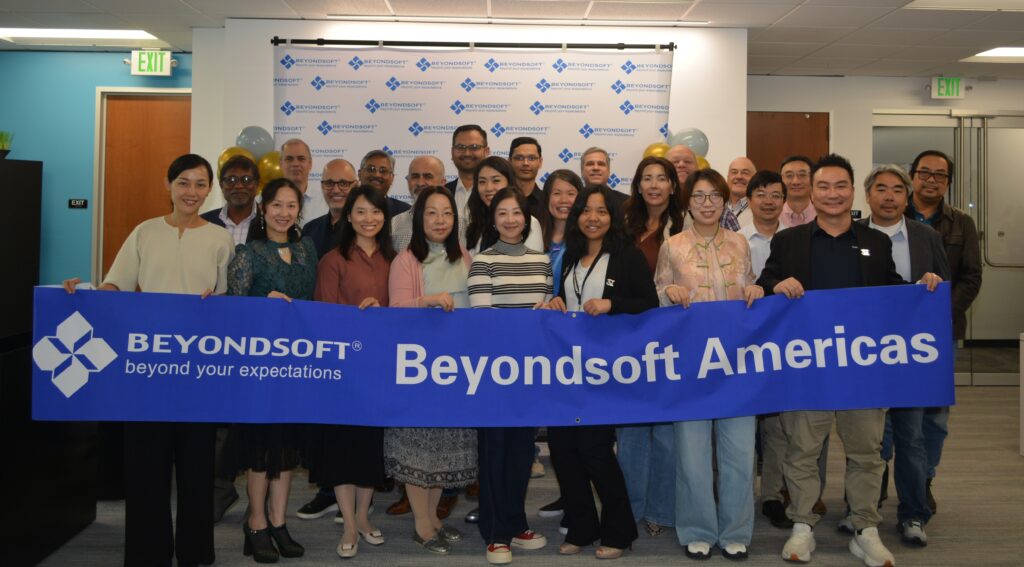
]]>
AI Becoming a Part of Everyday Work
AI isn’t a hype anymore. It’s showing up in business workflows and solving real problems. We’re seeing some of our clients play multiple roles: they’re the orchestrator, builder, and operator. We’re helping them figure out what works, how to get started, and how to keep things simple to stay ahead of their competition.
How We Got Here
We started our AI journey more than eight years ago and we have a clear goal: make knowledge easier to use. Our first tools were chatbots, but we quickly saw the need for something more intuitive, especially for people who aren’t technical.
So, we focused on no-code tools and a machine learning (ML) framework to streamline the model maintenance process that is simple and fast. You just need a problem to solve.
What We Showed at the Event
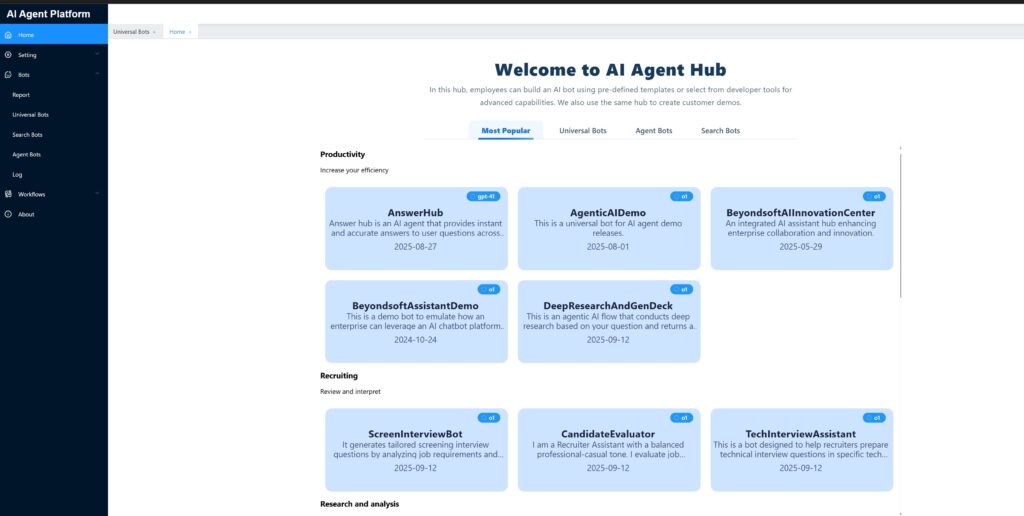
We demoed how our AI Innovation Program focused on two areas:
- Helping employees learn and practice AI their way
- Solving real customer problems with AI
Instead of required training or buying licenses, we made it easy for our employees to learn and experiment. We’ve created a few pre-built templates that are secure, flexible, and constantly evolving. We want our employees to learn, practice, and improve their AI literacy skills. In the same platform, they can also build applications if they want to. We know that when employees experiment, they will find creative ways to solve complex problems. The platform can also be tailored for your organization to build AI-augmented apps to tackle use cases like fraud detection, payroll, procurement, and more. These examples show how human-led, human-in-the-loop, AI-assisted can remove routine tasks so people can focus on meaningful work.
In fact, one of our customers in Brazil is using our AI innovation platform to build a knowledge-based solution. They’re starting small and exploring what’s possible.
Internal Answer Hub
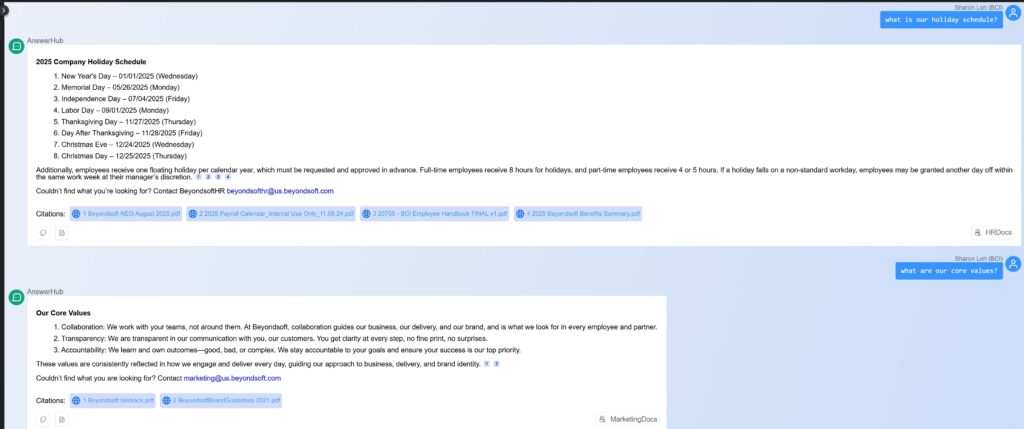
Sharon Loh demoed our Answer Hub. A smart assistant that provides instant access to company policies, processes, and client stories easily. It’s like having a company sidekick that is always ready to help. It is accurate, fast, simple, and always available. For more complex needs, employees can still reach out to our individual functional teams.
Currently, our?functional teams?handle all information requests manually. This creates constant interruptions for routine questions that could be answered instantly. The Answer Hub handles these common queries automatically, reducing interruptions, and letting our functional teams focus on issues that need human judgement. ?
We’re piloting this to test whether it improves response times and reduces the daily interruption load on our team members.
AI Support Agent
Jeff Bostwick demoed a support agent built for one of his Technology clients. It helps employees understand the types of support programs and discounts available based on contract terms.
Our client has many customer programs that are complex and constantly evolving. Our role is to back up the internal teams who serve those customers every day. The AI Support Agent Project helps the team members get fast answers, cut down on the requests they need to send us, and build confidence through self-service and learning.
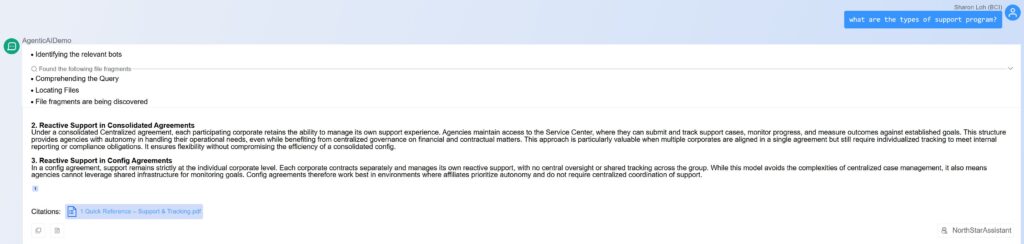
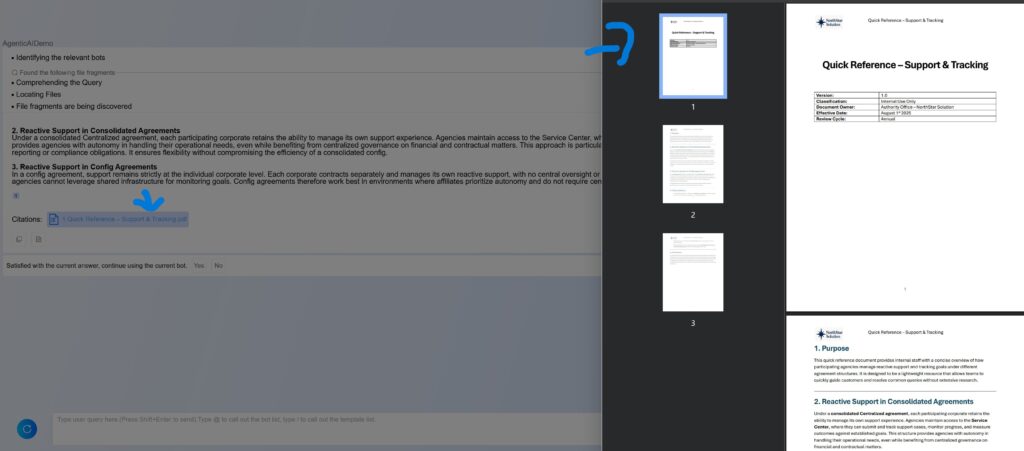
These two scenarios illustrate the use of AI to easily tackle repetitive tasks and tap into a multi-modal corporate knowledge base.
Fraud Detection
Most banks’ current fraud detection is probably missing more threats than it catches. Fraudsters are getting smarter, but most financial institutions are still using outdated rule-based detection that can’t keep up. This video explains how AI fraud detection works, why it’s becoming essential for financial institutions, and why this same proven approach can be adopted by healthcare, telecom, transportation, and other industries.?Watch this video below to see how AI handles fraud detection.
Data Operations Assistant
Routine data checks are tedious and time consuming. It’s complexity growing as your data volumes grow. Our Data Operations Assistant automates these tasks, freeing up data editors and managers to focus on high priority work. Watch this video below to see how AI handles data checks.
Digital Employee System
Manual software testing is slow and error prone. You’re not required to write complex test cases and execute it manually. Our Digital Employee System lets you coach AI through natural conversation from test case creation to execution. Every step is traceable, making issue resolution faster and easier. Watch this video below to see how AI executes test cases.
Spotlight: Our Partnership With Globo
Joao Labre, our Modern Work and Security Director flew in from Brazil to share how Globo is using Microsoft 365 in creative ways. They ran a hackathon where employees submitted cases or scenarios where AI solve everyday frustrations.
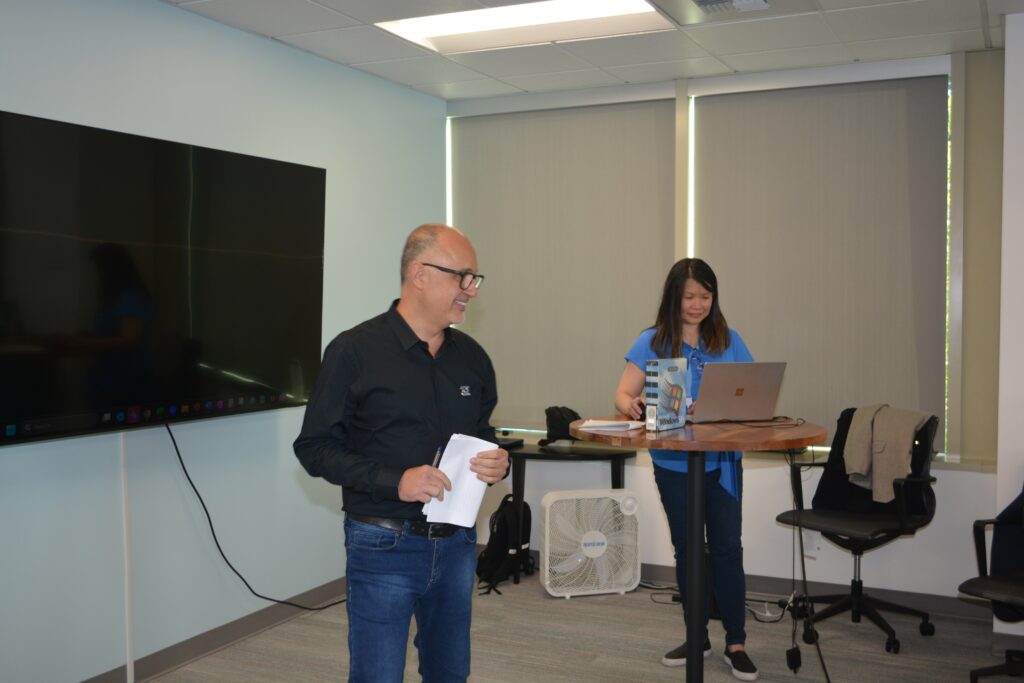
To ensure employees have a channel to ask questions, seek guidance, or test their hypotheses, we partnered with Globo to develop a mentorship program that was tailored to Globo’s culture helping their employees learn and adopt AI with ease during the hackathon. Through the mentorship program, we became temporary employees, fostering trust, and fast-tracking their AI learning process.
Joao shared a practical ROI framework that measures time, usage, and innovation. Months later, their teams are still building using Copilot.
Our partnership does not stop at the mentorship program. We’re working with them to explore the following:
- Agentic AI Governance
- Microsoft Copilot adoption program for 200 managers
- Copilot Studio adoption for 700 users which includes a four-month long AI Agent hackathon
A Celebration to Remember
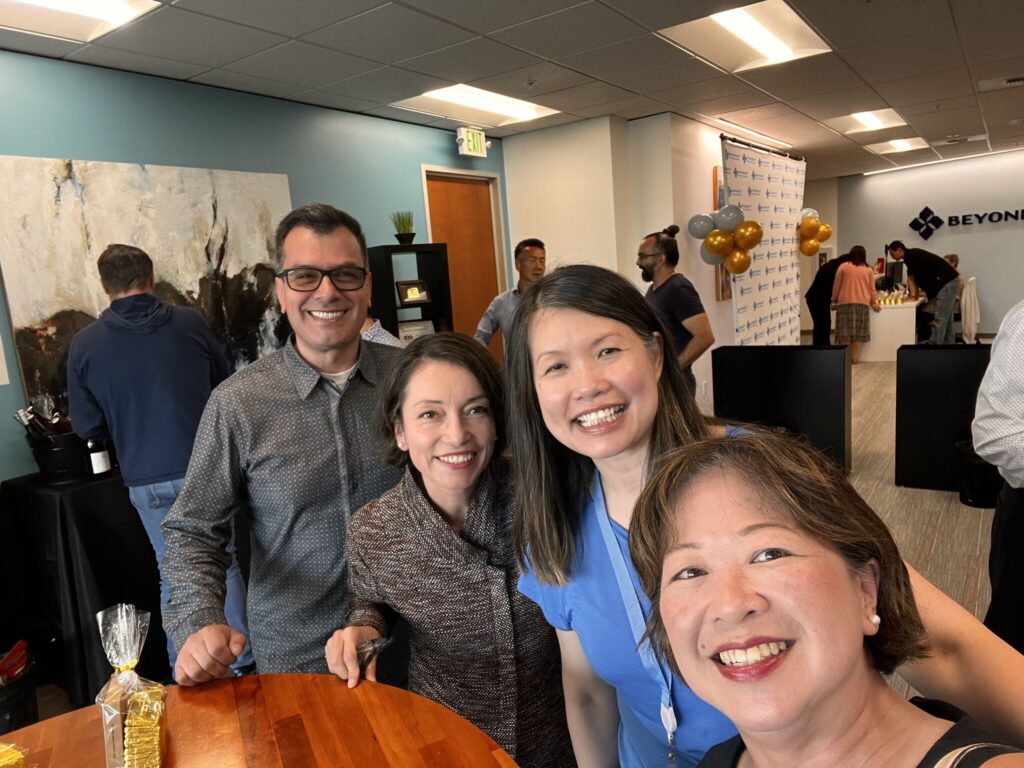
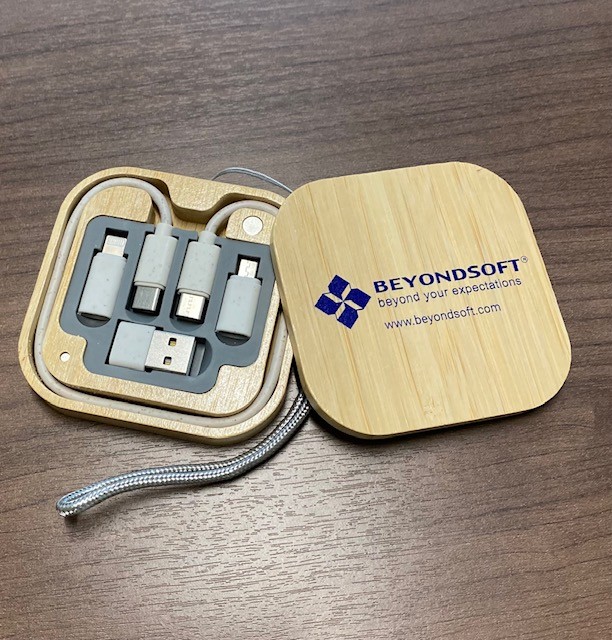
Beyond the demos and presentations, our guests connected, shared ideas and left with clear next steps for their AI journey. To make the event, more special, we skipped the usual branded swag and gifted each guest with a “gold bag” filled with premium chocolate and a useful tech accessory.
Thank you to everyone who took part in celebrating this milestone. We look forward to many more gatherings, learnings, and shared experiences ahead!

The post Beyondsoft?Americas?Team?Celebrates 30th?Anniversary?with AI, People, and Progress? appeared first on Beyondsoft Consulting Inc.
]]>The post A New Home That Fits How We Work appeared first on Beyondsoft Consulting Inc.
]]>What We Wanted
- A place that supports real collaboration.
- A reason to come in not “because” we want them to.
- A workspace employees can use when they want, without changing their remote routine.
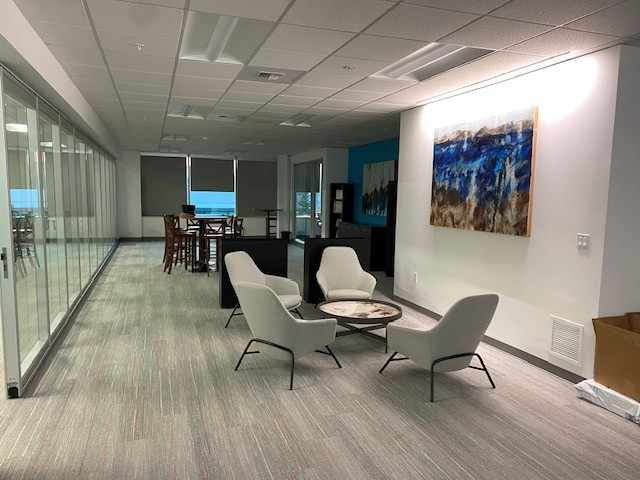
Flexible Spaces for Every Need
We picked a location that’s close to our clients and easy to get to. Food, shops, transit, all nearby. That matters when our employees choose whether to commute. The space itself? It’s built around how we work.
- A gym for employees who want it.
- Hot desks for folks who want to drop in.
- The HUB is where employees meet for coffee or quick chats.
- A beautiful campus for outdoor walks when the weather is great.
- Big conference rooms help when we need to meet in person and with our clients.
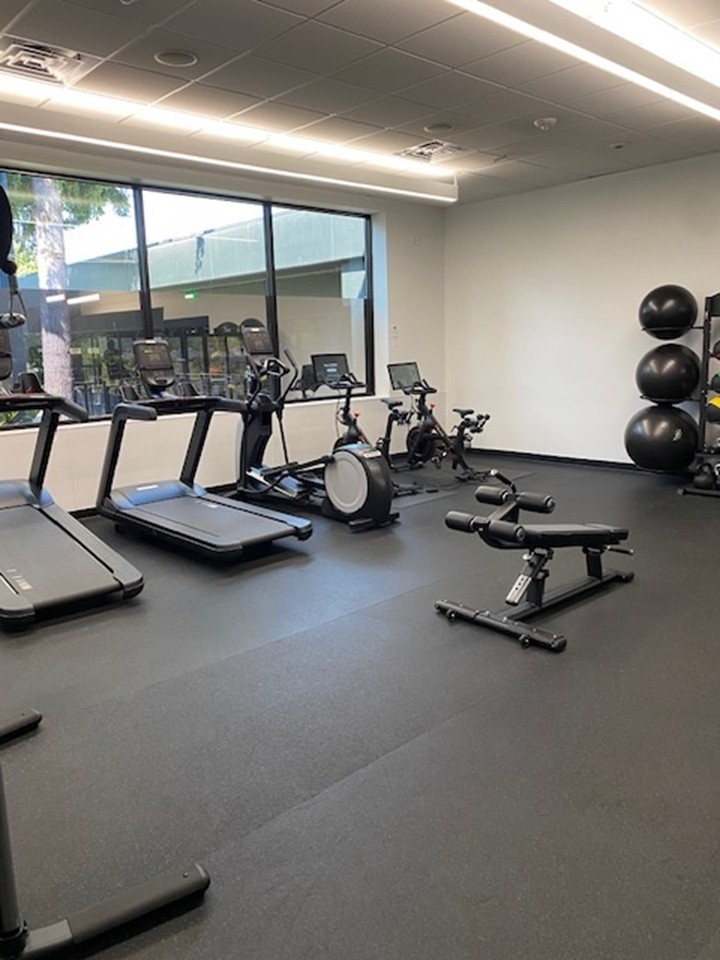
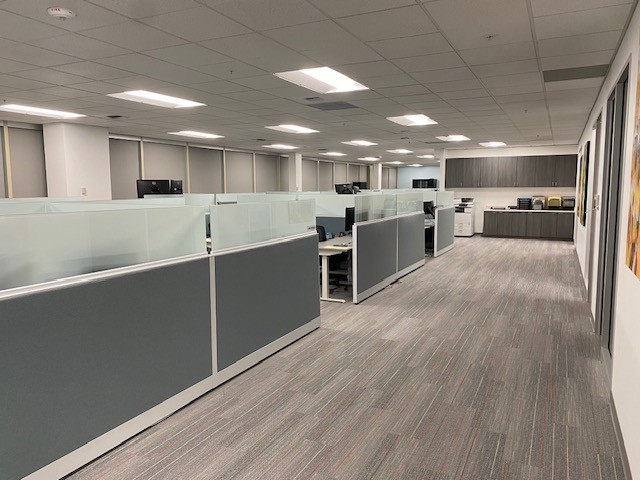

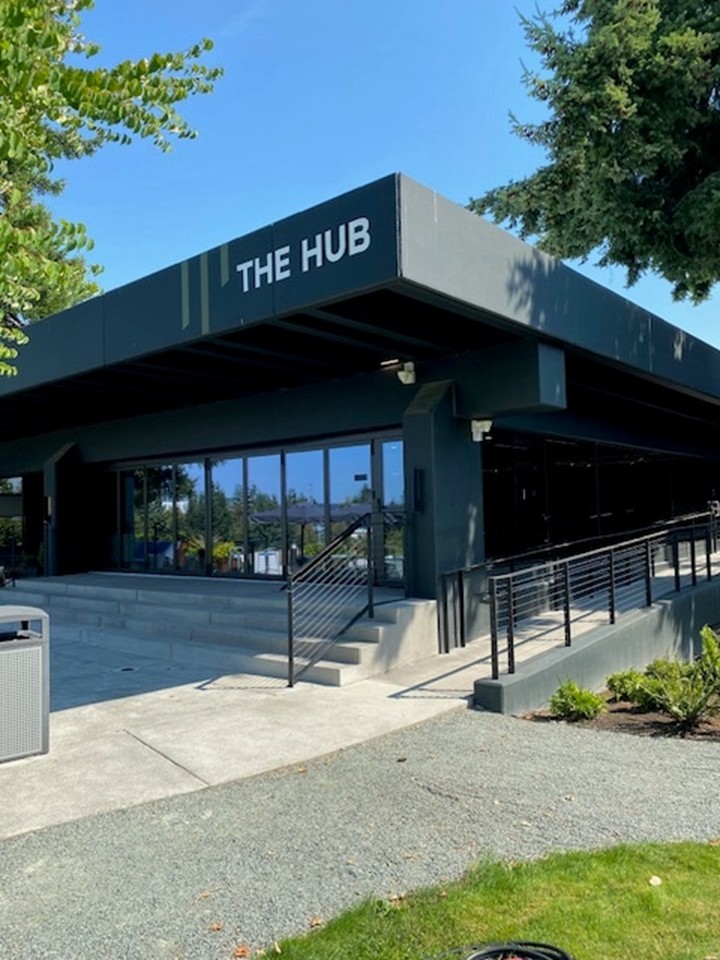


Why it Matters: A Workplace That Inspires
When our employees come to the office, they should feel it is worth it. By creating an office that employees want to come to, it helps with:
- Team connection.
- Better client meetings.
- Making in-person time useful.
Our new Americas head office is a testament to our commitment to employee success. It’s about social connections, spending time together to get to know each other better and drive client success. We want a workplace where employees feel fulfilled and bring their best selves to work.
Jasmine Jin, Managing Director, Beyondsoft Americas Region
Looking Ahead
As we settle into our new space, we remain focused on the same goal that has driven us since the beginning: to make a difference for our clients and our team. This new chapter is not just about a fresh start; it’s about building on our legacy and creating even greater opportunities in the years to come.
The post A New Home That Fits How We Work appeared first on Beyondsoft Consulting Inc.
]]>The post Our 30th Anniversary: Celebrating with Our Clients, Partners, and Team? appeared first on Beyondsoft Consulting Inc.
]]>The original blog was published on?Beyondsoft Brazil?
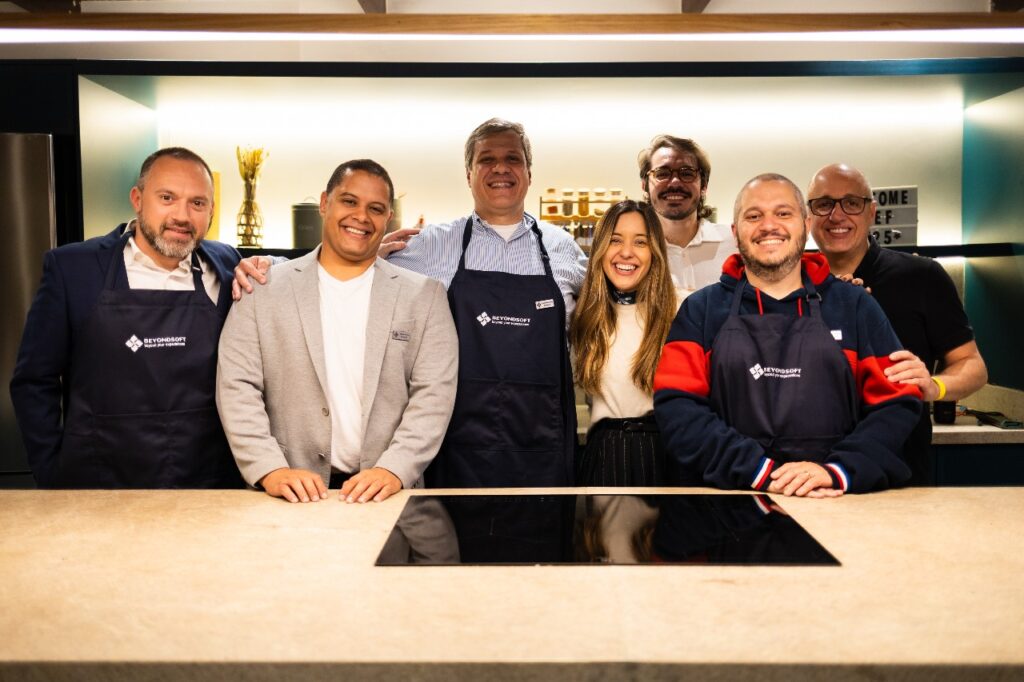
Celebrating a thirty-year legacy is an important milestone for any organization. For us, we marked this occasion to strengthen connections and create new memories with employees, clients, and partners. We hosted a special event blending technology, learning, and an unforgettable culinary experience with top Chef Ludmyla Lobo and her Sous Chef “Chef AI,” an agent created by our Beyondsoft Brazil team using Microsoft 365 Copilot.
A Conversation We’ll Remember: AI Culture at Globo
Wagner Xavier, User Experience Manager at Globo, shared the key challenges his company faced on their path to becoming an “AI-First” organization. Globo has invested in artificial intelligence to transform consumer, advertiser, and content experiences, as well as other areas within the company. They know that AI is a powerful ally in the pursuit of efficiency and personalization.?
Globo chose Copilot because it integrates naturally with the tools their employees already use, making adoption easy and organic. Wagner shared that his team is focused on fostering a true cultural transformation. Empowering people, encouraging engagement, and building an environment that welcomes innovation are essential for technological solutions to make a real impact on their daily work.
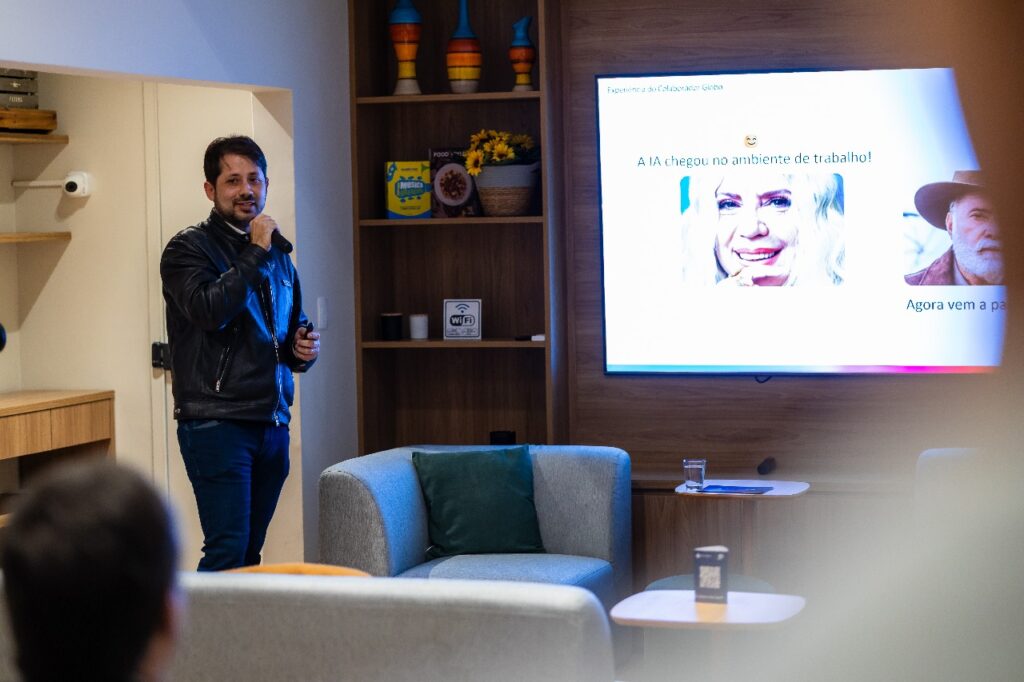
To realize their vision, Globo created the “You + AI” program. This initiative is designed to integrate AI into employees’ daily routines, promoting a culture of learning and best practice sharing. Globo wants their team members to expand their comfort zone, challenge assumptions, and explore what’s possible as they increase their AI footprint.
It’s important to align user expectations with what the tool can consistently deliver, and that’s also a learning journey. When we started, Copilot wasn’t available in Excel yet. The tool keeps evolving and new features are added regularly.
Wagner Xavier, User Experience Manager at Globo
Culture is the greatest challenge, not the technical learning itself. Getting users to truly embrace fresh approaches and the new solution requires a mindset shift. It’s about helping people feel confident using new technology and making it part of their daily routines. After all, if they don’t adopt the solution, we won’t see results from the work done.
Jo?o Labre, Modern Work & Security Director at Beyondsoft Brazil
Driving Real Results
We are proud to partner with Globo on this journey. We worked side-by-side with their team to promote AI culture and the ease of adopting Microsoft 365 Copilot. We’re not here to add more tools to our teammates’ stack; rather our aim is to reveal the value of AI and how it can remove common friction points so that we don’t slow down their process workflow.
As Jo?o Labre, our Modern Work & Security Director highlighted, building an AI culture involves employees’ buy-in, it is important to develop customized training that is engaging, supportive, and collaborative.
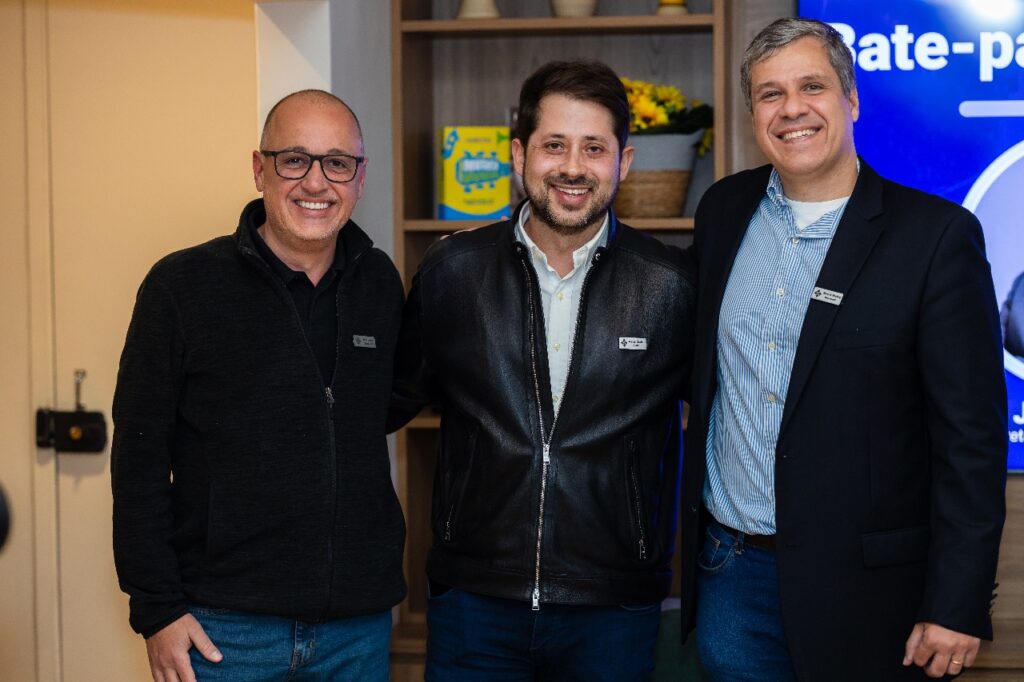
Beyondsoft is a great partner. Their team understands how Globo works and didn’t come with a ready-made formula. They brought Microsoft expertise to build something together with us. That made all the difference.
Wagner Xavier, User Experience Manager at Globo
A Word from Our Invited Guests
We asked a few guests to share their thoughts after the fireside chat between Wagner and Jo?o. Their words really reflected the human connection that came across:
Reinaldo Faria from Bold Hospitality Group shared: “Listening to the Globo story, their experiences, and the lessons learned make all the difference for the journey we are building.”??
Eric Morimoto from DASA chimed in: “The event experience was rewarding. Beyond the connections, we were able to exchange ideas not only about AI, but about what truly matters, values and people.”??
“The Globo case is really cool! It was an incredible experience where we had great conversations with each attendee. The moments of connection and the experience of doing something different together with a Chef, that’s truly amazing,” said Eduardo ?ngelo from WeVets.?
Feedback like this serves as a reminder of why we are trusted by our clients to do this work.
Many Flavors, and a Culinary Experience
Alongside the deep dive into technology and innovation, our event was also a moment to celebrate. After all, our company’s 30-year history is marked by achievements and partnerships, including three impactful years in Brazil.
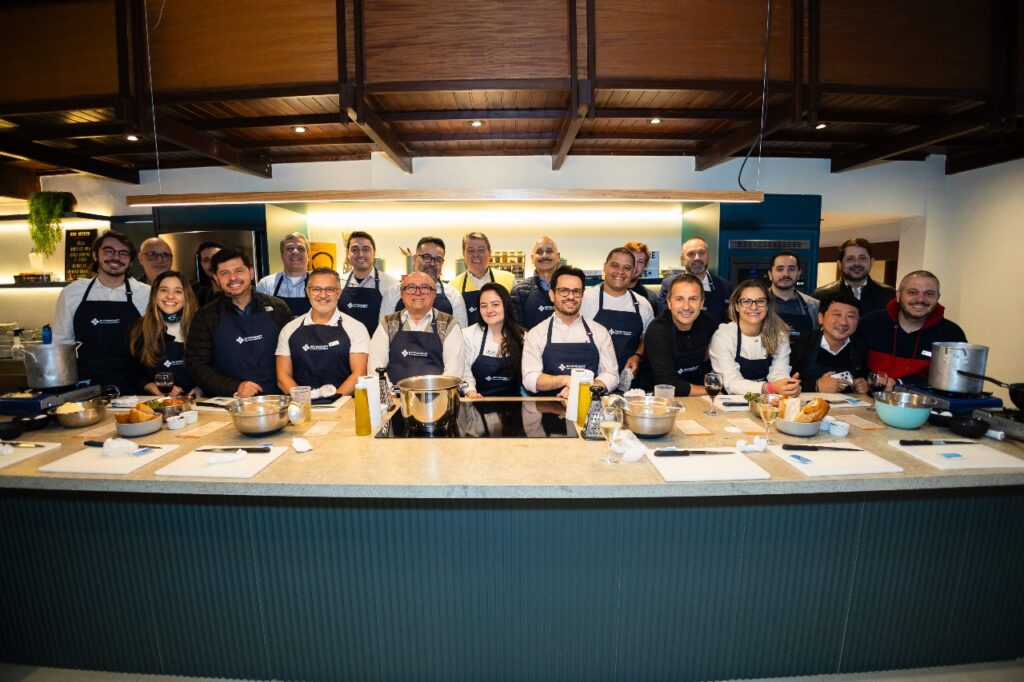
To make the celebration even more special, our guests took part in a unique culinary experience. Led by Chef Ludmyla Lobo and Sous Chef “Chef AI,” everyone got hands-on and cooked a full menu from starters to dessert, including a risotto worthy of top chefs! Between laughter, culinary tips, and lively interaction, the experience reaffirmed what we believe: the best ideas, human connections, and projects are born when we’re together sharing moments.
Looking Ahead: Innovation, Collaboration, and Celebration
What made our 30th anniversary celebration special was the people. Our employees, clients, and partners who’ve trusted us, challenged us, and grown with us.
Every breakthrough we experience, we celebrate with you in mind. You’ve taught us that success is measured by solving real-world problems. As we move forward, that is exactly how we want to keep growing, one real problem, one real solution at a time.
Thank you to everyone who took part and made this moment memorable. We look forward to many more gatherings, learnings, and shared experiences ahead!
The post Our 30th Anniversary: Celebrating with Our Clients, Partners, and Team? appeared first on Beyondsoft Consulting Inc.
]]>